Convention or competition?
The two words get used together, and many events are both. The difference is what your dancer spends the weekend doing:
| Convention | Competition | |
|---|---|---|
| Your dancer | Takes classes, most of the day | Performs the studio’s routines on stage |
| Who is in charge | Visiting teachers and choreographers | Judges, who score each routine |
| Grouped by | Age group, for classes | Age division, level, style and group size |
| Recognition | Scholarships, sometimes titles | Scores, placements and special awards |
| Costumes | Dancewear for class | A costume, hair and makeup for each routine |
| You | Watch classes, if allowed; keep the day moving | Watch from the audience; help with changes |
A typical weekend
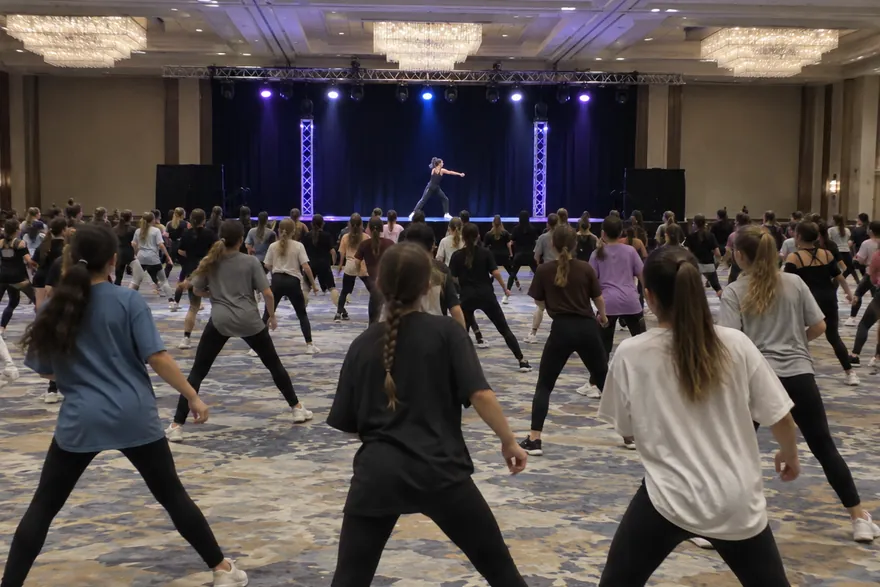
Most conventions run over a weekend, often starting on Friday evening or Saturday morning. Each age group follows its own class grid: a run of classes in different styles, with short breaks and a lunch break. Many weekends end with a showcase or a closing show, and if there is a competition, routines perform between or after the classes.
The schedule itself often arrives late. NUVO, for example, runs “Friday through Sunday, with Friday being optional in select cities,” and says “Tentative workshop schedules are available one week prior to the event.”
Source: NUVO Dance Convention, Workshop Info, read October 4, 2026.
Classes by age group
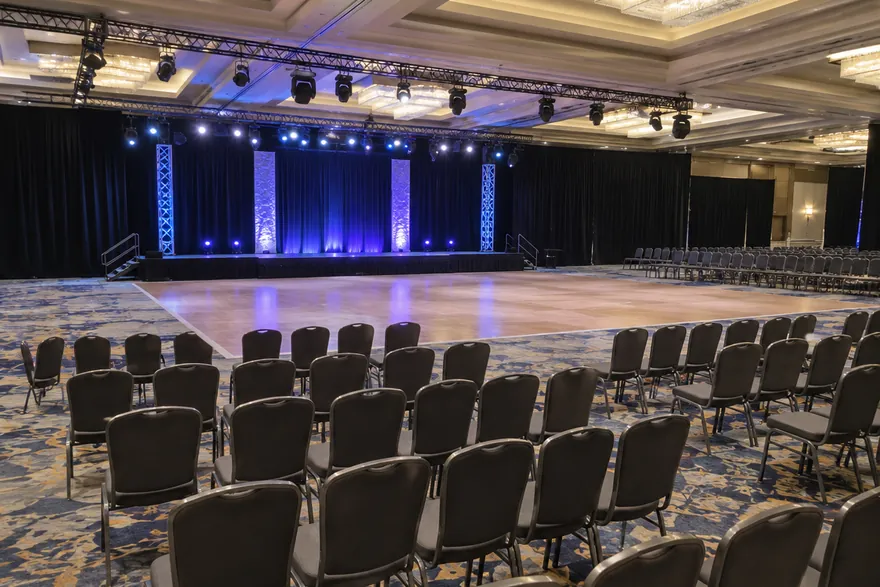
Dancers take classes with their age group, each in its own room. Every company sets its own group names and ages. NUVO’s workshop levels, as an example:
- Nubies, 5–7
- Mini, 8–10
- Junior, 11–12
- Teen, 13–15
- Senior, 16–19
NUVO adds that these ages “are simply guidelines — Studio Owners/Directors may use their discretion to place dancers in the appropriate classroom level,” and that ages count as of January 1.
Source: NUVO Dance Convention, Workshop Info, read October 4, 2026.
So go by the group the studio gives you, not your dancer’s age. With two dancers in different groups, you will have two grids and two rooms, often at the same times.
Scholarships and auditions
Many conventions give scholarships: awards chosen by the teachers, often toward a future convention or a training program. Some choose them by watching classes, and some hold separate audition classes. What a scholarship covers, and when it has to be used, differs from company to company, so read the terms before you plan around one.

Watching classes
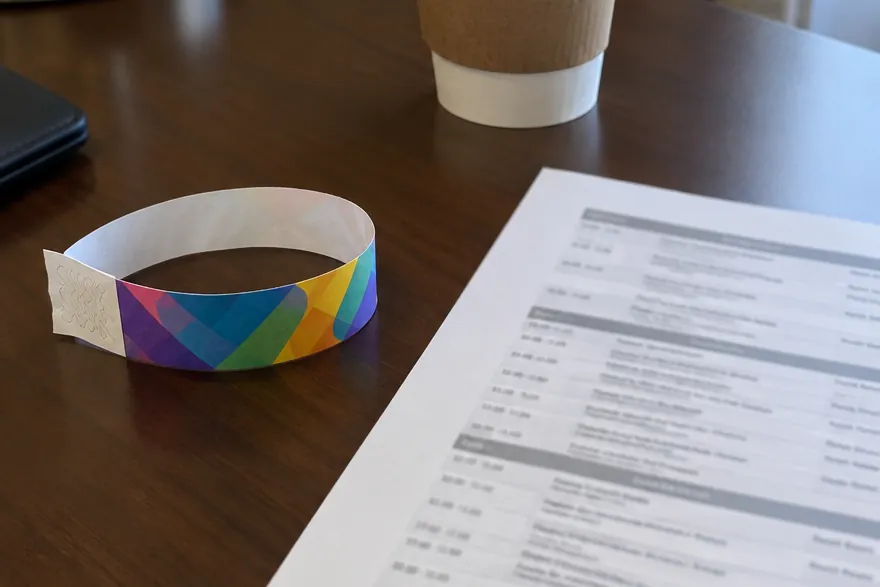
Parents can often watch, but usually need a pass. At NUVO, “Parents of registered dancers are allowed into the workshop classes if they have purchased an Observer wristband,” observers are not allowed into the audition classes, and there is “NO videotaping or photography allowed at any point during the workshop classes.”
Source: NUVO Dance Convention, Workshop Info, read October 4, 2026.
Other conventions have their own rules and prices, so check the company’s page before you go. Even where you can watch, rooms are crowded: sit at the back, and let your dancer find you at the break.
What to pack and wear
- Fitted dancewear your dancer can move in all day, and a change for the afternoon.
- Shoes for every style on the grid: jazz shoes, ballet slippers, sneakers for hip hop.
- Knee pads, if your dancer uses them for floor work.
- A layer for between classes. Ballrooms can run cold or hot.
- Hair up and secure, with spare pins and elastics.
- Lunch, snacks and more water than you think: breaks can be short and lines long.
- The wristband or badge, and the day’s schedule.
Studios sometimes ask the whole group to wear the same thing, so ask yours. If there is a competition the same weekend, pack for it as well: the dance competition packing list has a section of convention add-ons.
Keeping each dancer’s group schedule
On paper: highlight your dancer’s group on each day’s grid, write the room beside each class, and mark the breaks and lunch. With two dancers, use two colors, and agree where you will meet at every break.
Or let Ovation sort the grid
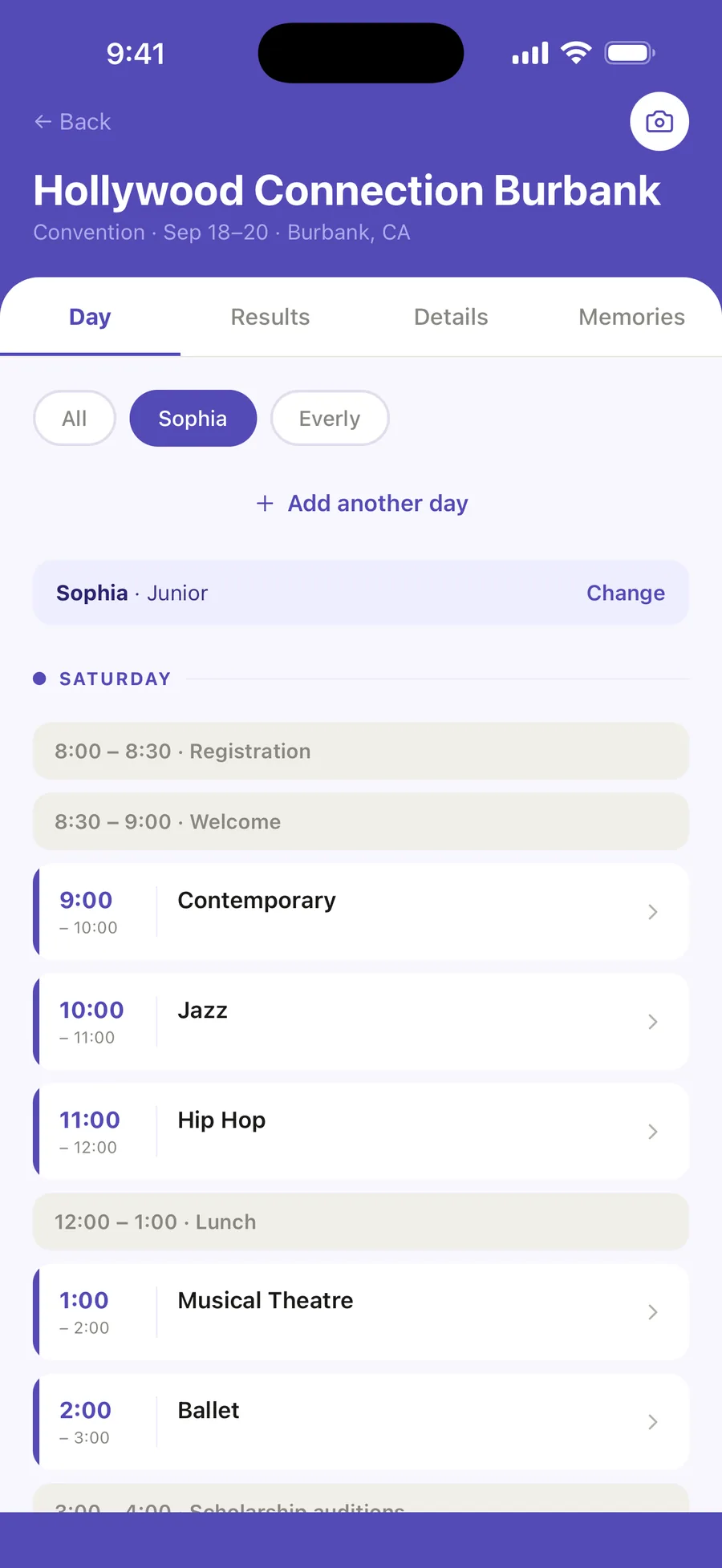
In Ovation, the dance family planner for iPhone, you add a convention like a competition and import its class grid one day at a time, from a PDF, a photo or pasted text. Choose your dancer’s group, and their classes and breaks for that day land in time order on the convention’s Day tab and in their week.
With more than one dancer, you choose each dancer’s group, and All shows everyone’s classes with their names. Scholarships, titles and invitations go on the convention’s Results tab.
Each day you import is one of the free plan’s first two AI imports, and typing the classes in is free.