One bag per routine
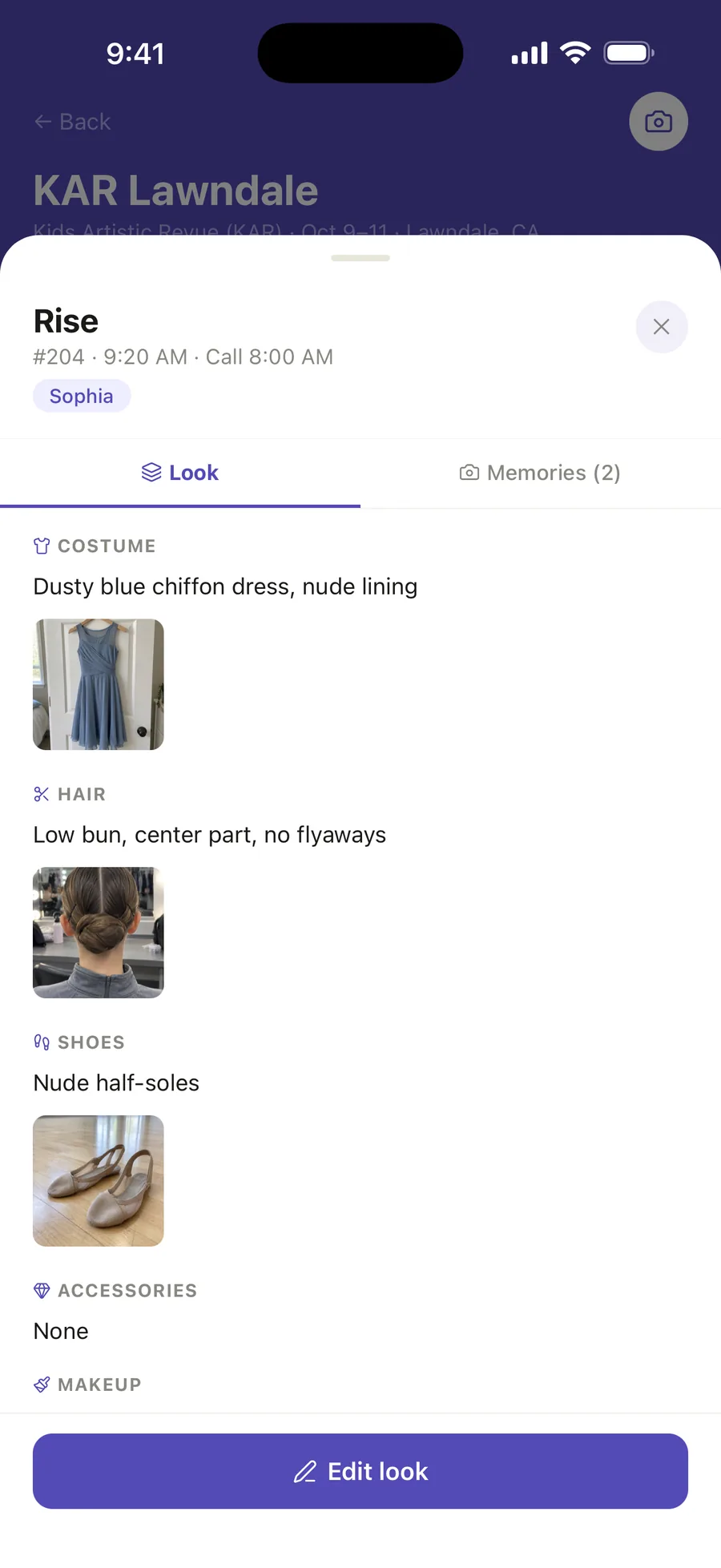
The one rule that saves the most panic backstage: a routine’s look never lives in more than one place. When it is time to change, you pick up one bag and everything is in it.
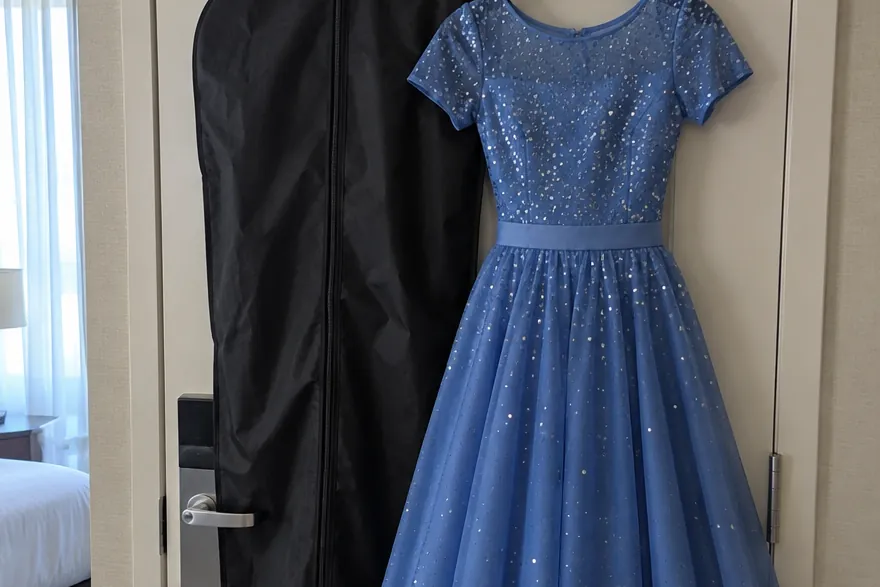
- A garment bag for each costume, on its own hanger. A clear window or a label on the outside says which routine it is.
- Accessories in a clear pouch hung on the same hanger: earrings, the headpiece, gloves, anything small.
- Tights and shoes in the bag’s bottom pocket, or a shoe bag clipped to the hanger.
- A tag with the routine’s name, the dancer’s name if you have more than one, and the entry number once the schedule is out.
The same rule works at home: one hook or one section of the closet per routine, and nothing gets borrowed from one look for another.
A photo of the complete look
The first time your dancer wears the full look (often at dress rehearsal or picture day), take photos: front and back, a close-up of the hair from behind, and the accessories laid out. It takes two minutes and pays back all season.
- Repacking for the next competition becomes matching the bag to the photo.
- Another parent, a grandparent or a sitter can dress your dancer from it.
- You can see where the headpiece sits, which earrings go with which costume, and which way the bun faces.
The quick-change kit
A small case that goes wherever your dancer changes:
- Safety pins in several sizes, and fashion tape.
- A small sewing kit with thread in your costume colors, and small scissors.
- Clear nail polish to stop a run in tights, and a stain stick.
- Fabric glue for a loose rhinestone, spare earring backs, and a lint roller.
- Extra bobby pins and hair elastics.
- A towel to stand on, so tights and feet stay clean on a dressing-room floor.
And for the change itself:
- Lay the next costume out in the order it goes on, unzipped and unhooked.
- Loosen the next shoes, and have the hair piece ready to pin.
- If the studio allows it, wear the next routine’s tights under the first.
- Have a helper: one person on the costume, one on hair and shoes.
- Practice once at home with a timer, so the first try isn’t backstage.
Spotting the tight changes starts with the schedule: how to read a dance competition schedule explains how.
Hair and makeup notes for each routine
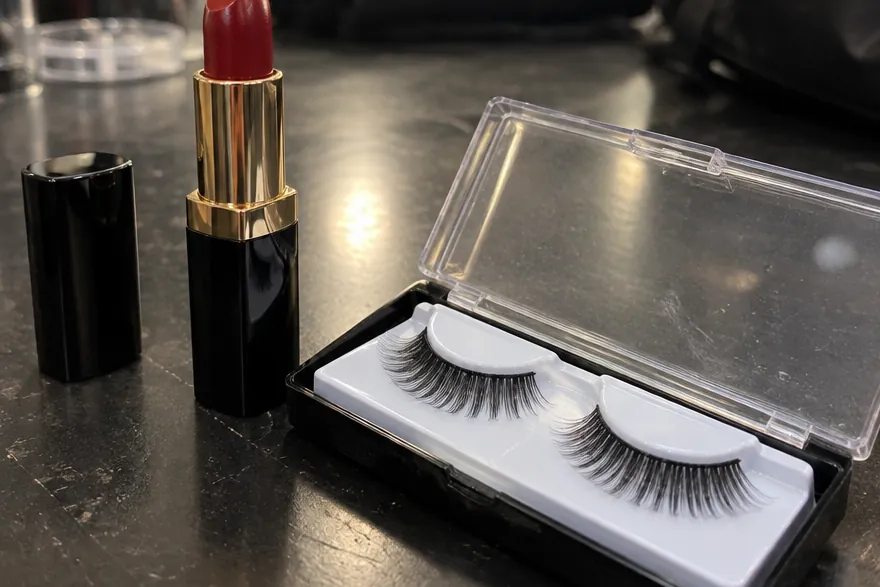
Studios often set a different hairstyle, hair piece or lipstick for each routine, and by the third competition it is easy to mix them up. Write a short card for each routine and keep it in the bag, or on your phone with the photo. An example, for a contemporary solo:
| Part | What it needs |
|---|---|
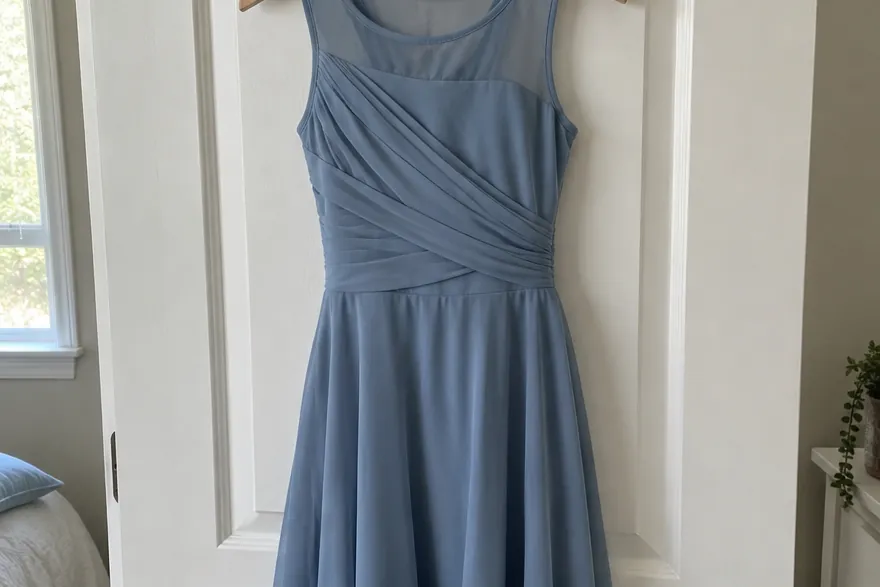
| Costume | Dusty blue chiffon dress, nude lining |
| Tights and shoes | Tan convertible tights; nude half-soles |
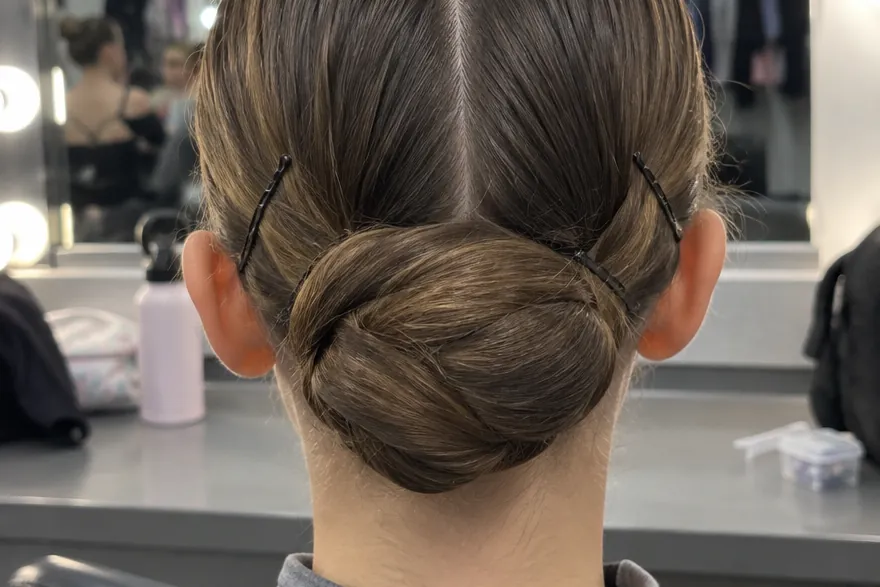
| Hair | Low bun, center part, no flyaways |
| Makeup | Soft bronze eyes, rose lip, lashes |
| Accessories | None: take earrings out |
| Notes | Steam the skirt the night before |
During the season
- Unpack the night you get home. Hang every costume up to air, out of its bag.
- Check for loose rhinestones, hooks and seams, and fix them before they get worse.
- Clean only as the care label says. Many competition costumes should not go in a washing machine.
- Wash tights by hand and let them dry flat, and replace any with runs.
- Put everything back in the routine’s bag, and check it against the photo.
End-of-season storage
- Clean, mend and dry each costume fully before it is put away.
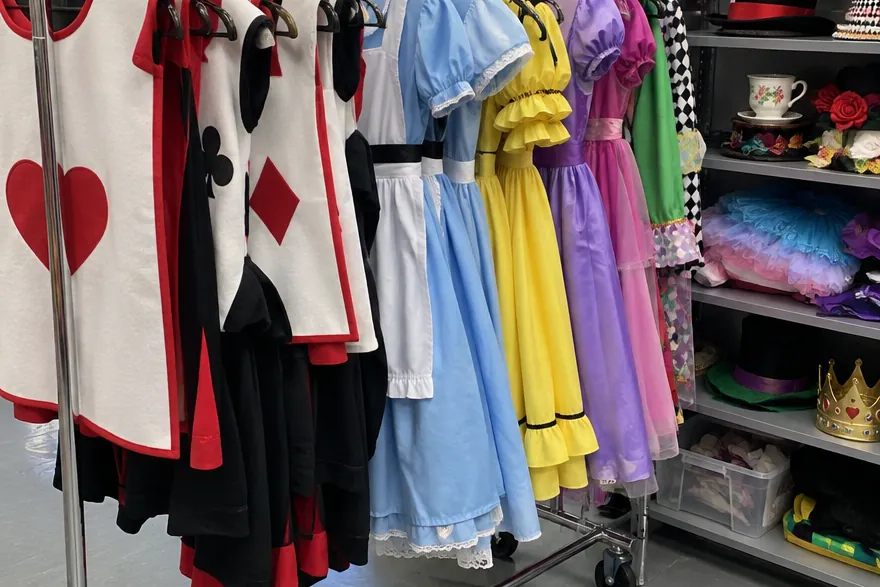
- Use padded hangers and breathable garment bags, away from sunlight and damp.
- Keep tutus flat, or hang them upside down, so the net keeps its shape.
- Leave each costume’s accessories in a labeled pouch with it, and take a last photo.
- If the studio owns a costume, ask how and when it should come back.
Keep every look in Ovation
Ovation, the dance family planner for iPhone, keeps each routine your dancer competes with and its look: costume, hair, shoes, accessories, makeup and notes, with up to three photos of each part. Photos of the look are free.
On competition day, tap a routine on the Day tab to see its look. In the week before a competition, the packing checklist gathers every routine’s look, so you tick off each part as it goes in the bag.
Each routine also keeps its choreography videos (part of Ovation Pro: up to 3 per routine, each up to 5 minutes) and links to its music, which are free.
Routines and looks The packing checklist Choreography videos and music