What’s on a competition schedule
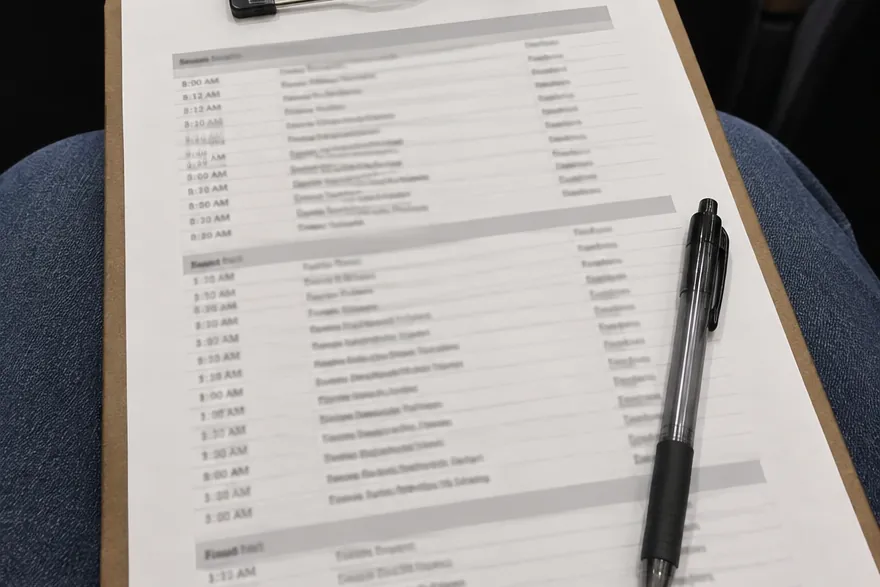
Most competitions send studios a schedule, often a PDF, in the weeks before the event. It lists every routine in the order it will perform. Your studio passes it on, sometimes as the whole document and sometimes as just your studio’s entries. The words on it mean:
| On the schedule | What it means for you |
|---|---|
| Entry number | The routine’s number for the whole event. Write it on the routine’s bag. |
| Performance time | When the routine is scheduled on stage. An estimate, not a promise. |
| Call time | When your dancer must be ready, before the performance time. Usually set by the studio. |
| Session or block | A run of routines, often grouped by age or level, usually followed by awards. |
| Division and category | Age group, level, style and group size (solo, duo, small group, line). |
| Awards | The ceremony for a session’s routines. Dancers usually go on stage for it. |
| Tentative and final | A first schedule, then a final one closer to the date. Plan from the final. |
Finding your dancer’s entry numbers
A full schedule can run to hundreds of routines. Search the PDF for your studio’s name (on an iPhone, open it and use Find), then for each routine’s title, and highlight every line that is your dancer’s. A routine with several dancers has one entry number for the whole group, so a dancer in a solo, a duet and two group numbers has four entry numbers to find.
Write each entry number beside its routine on your own list, and on the routine’s costume bag. It is the number you will hear backstage.
Performance time and call time
The performance time is when the routine is scheduled to start. The call time is earlier: the moment your dancer has to be in costume, hair and makeup done, wherever the studio meets. Competitions set their own rule for how early that is, and studios often add time of their own. Two examples, from the companies’ own rules:
- Kids Artistic Revue (KAR): performers “should be checked in and ready to perform at least one hour before their scheduled performance time”, and studios with routines in the first 10 acts “should arrive fully prepared to perform, including costume, hair, and makeup.”
- VIEW Dance Challenge (2027 Nationals): “Dancers must always be ready to perform thirty minutes prior to their scheduled time,” and entries report backstage “three numbers before the scheduled number.”
Sources: KAR, 2027 Rules and Regulations; VIEW Dance Challenge, 2027 Nationals competition rules; both read October 4, 2026.
An hour at one, thirty minutes at another: the rule differs, so read your own competition’s rules, and when the studio gives you a call time, use the studio’s.
Sessions and awards blocks
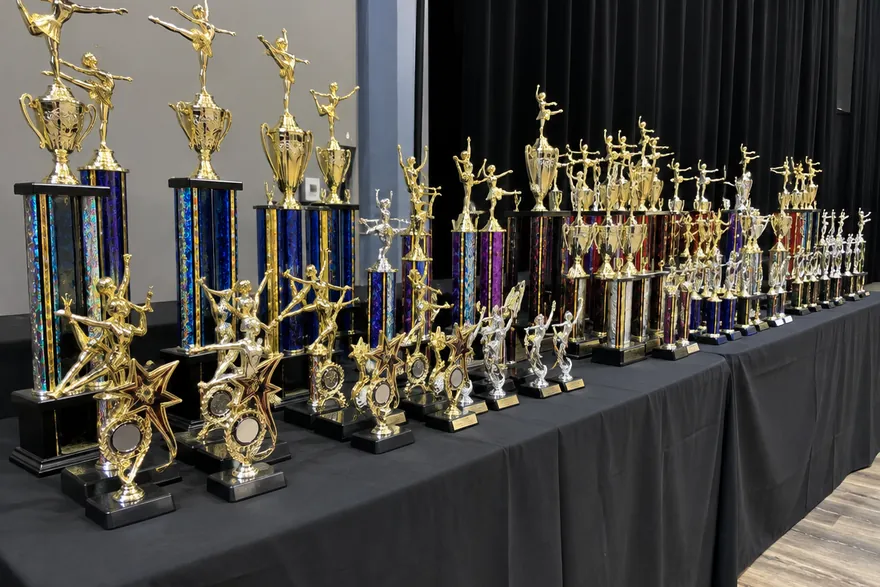
Competitions break the day into sessions or blocks, often by age division or level, with an awards ceremony after each block or at the end of the day. Your dancer may have routines in more than one block, and the awards for a routine can come hours after it performs.
Find the awards for each of your dancer’s routines on the schedule, and ask the studio what dancers wear on stage for awards (the costume, or a studio jacket) and where they meet before it. What the awards themselves mean is in competition awards explained. Awards are also when families leave or stay: if your dancer’s last routine is at 2:30 and its awards at 5:30, that is three hours to plan for.
How early to arrive
Work backward from your dancer’s first performance time:
- The competition’s ready-by rule, or the studio’s call time if it is earlier.
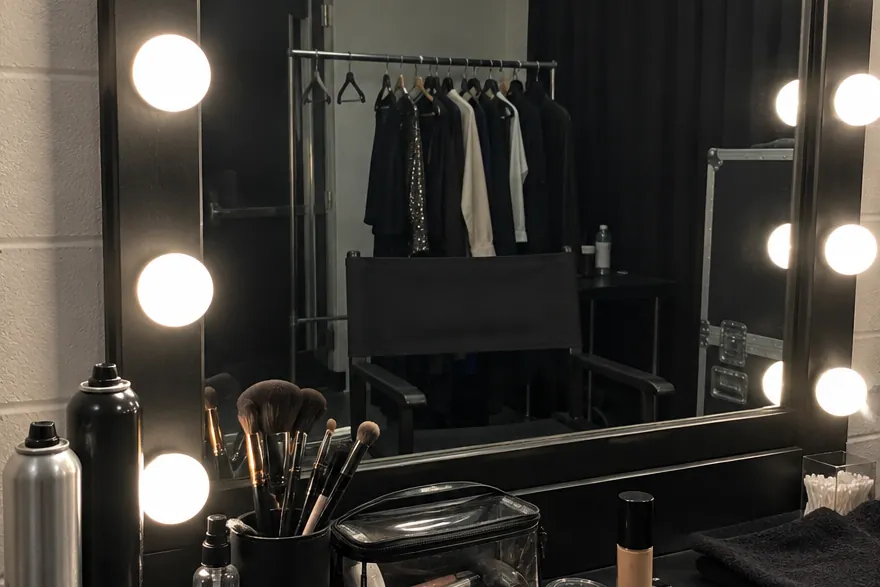
- However long hair, makeup and the first costume take your dancer, if they are not done at home.
- Parking, carrying bags in, and finding the dressing area.
- The drive, and a margin for traffic.
Schedules also change between the first version and the final one. KAR, for example, says a tentative schedule is available “approximately 2 weeks prior to the competition” and the final one “approximately 5 days prior to the event”. Plan from the final schedule, and check it again the night before.
Source: KAR, 2027 Rules and Regulations, read October 4, 2026.
Quick changes between routines
A quick change is when your dancer has little time between two routines: off stage, out of one costume, into the next, and back. Look at the gaps between your dancer’s performance times. A few entries apart is tight; an hour or more leaves room to breathe.
Some competitions have a rule for it. KAR’s says routines perform in the schedule’s order unless the competition director allows a costume change, and “Dancers are only permitted 3 acts for a costume change.” If two routines look too close, tell the studio early, not on the day.
Source: KAR, 2027 Rules and Regulations, read October 4, 2026.
- Set the next costume out in the order it goes on, unzipped, with its shoes loosened.
- Have the next hair piece and accessories pinned to its hanger.
- Ask another parent to help with zips and hooks, and change as close to the stage as you are allowed.
When the competition runs ahead or late
Schedule times are estimates. A day can run late (a long session, a technical problem, an awards ceremony that runs over) or ahead, when routines scratch and the next ones move up. Running ahead is the one that catches families out. KAR’s rules say that “If the competition is running ahead of schedule, performances will continue in the published order.”
Source: KAR, 2027 Rules and Regulations, read October 4, 2026.
- Be ready by the call time, whatever the stage seems to be doing.
- Know which entry number is on stage now, and how many are before yours.
- Don’t leave the venue between two close routines.
- When it runs late, shift every later time by the same delay, including awards.
Turning the schedule PDF into your family’s day
On paper: list only your dancer’s routines, in order, with entry number, call time and performance time; mark the gaps, the quick changes and the awards; and keep it on your phone as a photo. With more than one dancer, one list per dancer, then one combined.
Or let Ovation read it
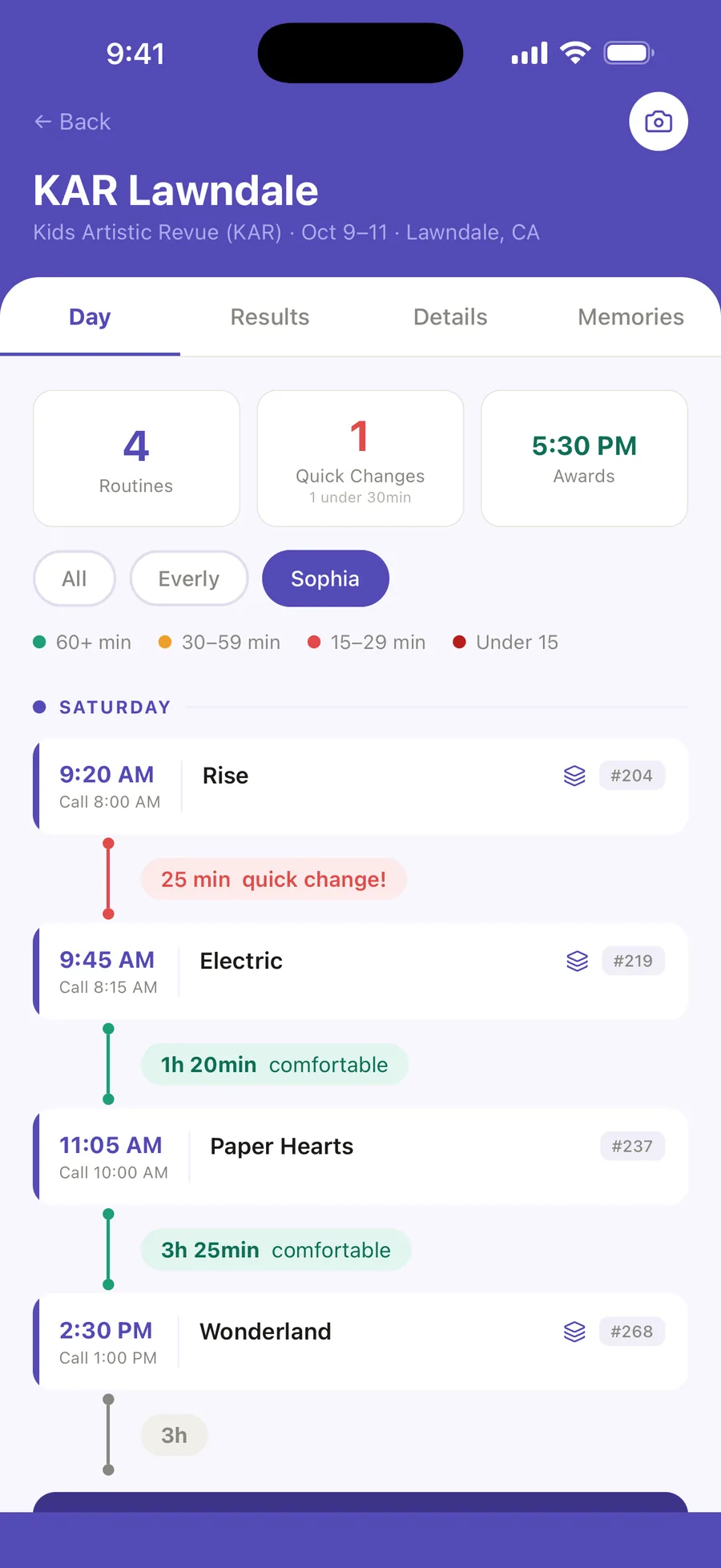
In Ovation, the dance family planner for iPhone, you send the running order as a PDF, a photo or pasted text, and tick your dancer’s entries. Their times, call times and entry numbers fill in the competition’s Day tab, and next time Ovation ticks matching entries for you.
The Day tab lists the routines in order, colors the time between them, and counts the quick changes under 30 minutes. On the day, it marks the next routine NEXT UP, and if the competition runs late, you choose the delay and every time on the page moves with it. An Awards row shows when awards start, so you can be seated in time.
A schedule import is one of the free plan’s first two AI imports, and typing routines in yourself is free.